KEYNOTE SPEAKER · CONFERENCE ANCHOR · CORPORATE SUMMIT
Keynote Speaker in India — Dr.
Mukesh Tyagi.
A keynote sets the intellectual and emotional agenda for the entire event. The talk the rest of the programme is built around. When the room demands the best — a Bollywood actor's craft, a corporate veteran's depth, a national television voice's clarity.
25+ Bollywood Films · 25 Years in Corporate India · National Television Personality · MBA Strathclyde
What Makes a Great Keynote
The word "keynote" is overused, and the misuse matters.
A keynote is not the same as a motivational talk. A motivational talk lifts the room temporarily. A keynote sets the intellectual and emotional agenda for the entire event. It is the talk the rest of the programme is built around — the one that gives a conference, a summit, or a corporate annual day its shape and its meaning. Get the keynote wrong, and the event never quite recovers. Get it right, and everything that follows feels purposeful.
A great keynote demands a speaker who can do three things at once. First, hold gravitas — the kind of presence that earns the room's attention before the first sentence is finished. Second, deliver substance — ideas the audience will still be turning over a week later, not just sentences they clapped at. Third, command a stage — five hundred or two thousand people held in genuine attention, not just polite obedience.
Most speakers can do one of these. Some can do two. Very few can do all three, which is why finding a credible keynote speaker in India remains one of the harder bookings in corporate event planning. The audiences are sophisticated. The expectations are rising. The penalty for getting it wrong is felt by the L&D team for months.
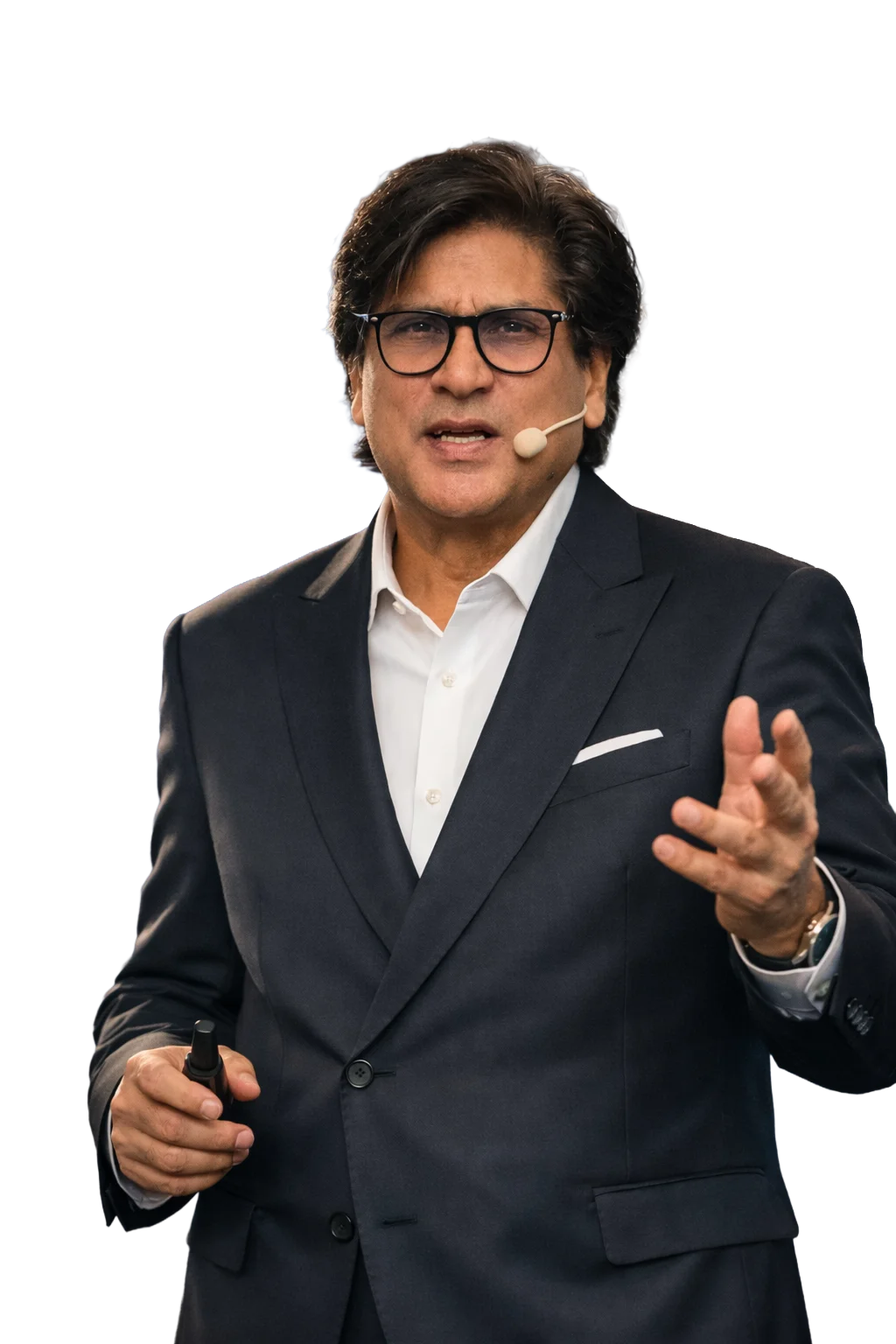
Dr. Mukesh Tyagi is one of the few names in the Indian speaking circuit who can credibly hold all three demands at once. The gravitas comes from the credentials — twenty-five years inside India's largest corporations, a Bollywood filmography under directors who themselves carry critical authority, and a national television presence built over years of live broadcast. The substance comes from the work. And the command of the stage was earned over decades, not bought with a microphone.
When an event needs a keynote speaker the room will actually remember, this is the kind of profile the booking should look like.
The Architecture of a Dr. Mukesh Tyagi Keynote
A Dr. Mukesh Tyagi keynote is built, not delivered.
The opening earns the room. He begins, almost always, with a specific story — a moment from a film set, a midnight phone call from inside a Mumbai boardroom, a green-room exchange before a live television panel. The stories are precise because they are real. Within ninety seconds, the audience has stopped checking their phones.
From there, the core framework unfolds. Every Dr. Mukesh Tyagi keynote carries a central idea — leadership under pressure, the discipline of reinvention, the architecture of influence — and that idea is held together by a screenwriter's structure, not a bullet-point deck. Theme establishes. Conflict arrives. The talk turns. Resolution lands. Audiences who have sat through hundreds of corporate keynotes notice the difference within the first ten minutes. They lean forward because something is actually being built.
The middle creates conflict and resolution. He does not flatter the audience. He pushes against assumptions, raises uncomfortable observations, and then resolves them through stories drawn from his own three careers. The audience moves with him because they trust the storyteller. They have already seen him earn the right to be heard.
Audience participation happens, but on his terms. He may call someone out by name, ask a sharp question across the room, or hand the microphone back to a senior leader to land a point together. The participation is purposeful — never gimmicky.
The close is cinematic. A return to the opening story, recast with new meaning. A single line designed to travel home with the audience. A call to action that does not feel like a sales pitch — because nothing is being sold. Just a room of professionals reminded what they are capable of.
That is the architecture. It is the difference between a talk the audience listens to and a keynote they carry.
Keynote Topics
Eight signature keynote topics that have moved the largest corporate rooms in India. Each is customised for the event, the audience, and the strategic moment — but each draws on the lived experience that no other speaker in the country can match.
The Art of Influence
How to move people — in a meeting room, on a stage, or across a negotiating table.
Learn moreLeadership in the Energy Sector
Specialist insights on leadership, strategy, and transformation for India's energy industry.
Learn moreIndia's Moment — Opportunity in the Age of Change
A grounded, inspiring perspective on what India's next decade actually means for the professionals living it.
Learn moreLeadership & Reinvention
How to lead yourself — and others — through radical change.
Learn moreThe Power of Story in Business
Why the leaders who win are the ones who can tell the story — and how to become one of them.
Learn morePurpose-Driven Performance
Why the professionals and organisations with the clearest sense of purpose consistently outperform those without one.
Learn moreReinventing Yourself at Any Age
The practical guide to becoming who you were always capable of being — even if you're starting over at 40.
Learn moreResilience & High Performance
The mental architecture of people who perform under pressure — consistently.
Learn moreConference & Summit Keynotes
A conference keynote is its own discipline.
Unlike a corporate annual day, where a single organisation gathers under one roof, a conference brings a multi-organisation audience — delegates with their own agendas, their own competitive concerns, and their own reasons for being in the room. A great conference keynote must do something a corporate keynote does not have to: it must give every delegate, regardless of which company they work for, a reason to feel the day was worth their time.
Dr. Mukesh Tyagi has anchored multi-day national summits, industry conferences, and CXO conclaves where the brief was exactly that — set the tone for forty-eight hours of programming, or close the event with a call to action that sends delegates back to their organisations changed, not just informed. He understands the texture of a conference room differently from a corporate room, and the talk is built differently for it.
For opening keynotes, the work is agenda-setting. The talk frames the questions the conference will spend the next two days answering, gives the programme its shape, and creates the energy the breakout sessions inherit. For closing keynotes, the work is consolidation. The talk gathers the threads, lifts the audience above the operational detail of the sessions, and sends them home with the line they will quote to colleagues on Monday.
Either way, the principle is the same: a great conference keynote is leverage on the entire event around it.
Who Hires a Keynote Speaker
The decision to book a serious keynote speaker is usually made by a small group of people — a conference chair, an L&D director, a CEO's office, an event lead inside a corporate marketing team, or the partner running a senior offsite. What they share is a recognition that the keynote is the single highest-leverage decision in the entire event.
Industry conferences book keynote speakers to anchor their flagship plenary sessions. National summits — particularly in BFSI, pharma, energy, technology, and infrastructure — book keynote speakers to set the strategic frame for the year ahead. Leadership conclaves and CXO retreats book keynote speakers to deliver the talk senior audiences will reference back at the office. Academic conferences and institutional events book keynote speakers to give their programming the prestige a marquee name brings. Government and public-sector events book keynote speakers when the moment demands a voice from outside the system who can still speak the language of policy.
In every case, the booker is making a calculation. They are weighing fee against impact, name against substance, and risk against reward. Dr. Mukesh Tyagi is the booking that, again and again, gives the right answer to all three.
The Keynote Credentials
Signature Keynote Topics
Years in Corporate India
Bollywood Films
Television Appearances
From Bollywood to the Keynote Stage
The keynote stage is not the film set. But the discipline that wins on one wins on the other.
Dr. Mukesh Tyagi's years in Hindi cinema — across Madhur Bhandarkar's urban dramas and Tigmanshu Dhulia's feudal trilogy — gave him reflexes that the corporate stage now benefits from in ways most audiences feel without naming. He learnt timing from working with directors who would not accept an off-pace line. He learnt the discipline of stillness, the most underrated tool in any performance — when not to speak, when to hold the moment longer than the audience expects. He learnt storytelling structure from the inside, working through hundreds of scenes built around acts, conflicts, and turns.
Most of all, he learnt presence. Two decades in front of a film camera builds a kind of stage authority that no rehearsal room can manufacture. When he walks onto a corporate stage today, he is not earning the room's attention through volume or theatrics. He is holding it the way an actor holds a long take — quietly, completely, and with the audience leaning in.
For organisations booking a keynote speaker in India, that is the unspoken edge.
What Event Organisers Say
Testimonials coming soon.
Frequently Asked Questions
A motivational talk is designed to lift the room — typically twenty to thirty minutes, focused on energy and inspiration. A keynote is something more deliberate. It sets the intellectual and emotional agenda for the entire event, usually running forty-five to ninety minutes, and carries a central thesis around which the rest of the programme is shaped. Keynotes require substance the audience can still recall a week later, not just sentences they clapped at in the moment. They are built around a screenwriter's structure — theme, conflict, turn, resolution — rather than a bullet-point list of motivational phrases.
Dr. Mukesh Tyagi delivers keynotes, not talks. The difference is felt by the audience, by the event's organisers, and most importantly, by the impact the booking has on the rest of the day's programme.
The most-booked keynote format is forty-five to sixty minutes — the natural fit for conferences, annual days, and summit plenaries where the keynote is one element of a wider programme. For events where the keynote is the marquee element of the day, a ninety-minute keynote with thirty-minute moderated Q&A is increasingly popular and consistently produces the deepest audience engagement. For shorter formats — TEDx-style platforms, opening welcomes, or compressed agendas — twenty to thirty minutes is possible, though the audience experience is necessarily lighter.
Every format is finalised in the briefing call after your initial inquiry, based on your audience size, event flow, and the outcome you want the keynote to drive.
Yes — and many multi-day events book exactly this configuration. An opening keynote sets the intellectual agenda for the conference, framing the questions the programme will explore over the following days. A closing keynote consolidates the threads, lifts the audience above the operational detail of the sessions, and sends delegates home with a call to action and a line they will quote at the office on Monday.
When Dr. Mukesh Tyagi anchors both ends of a conference, the talks are built as a deliberate arc — the opening establishes themes, the closing returns to them with the resolution earned by the days in between. Bookings for opening-and-closing combinations should be initiated eight to twelve weeks ahead to allow for the deeper preparation this format demands.
The default is purely spoken — a Dr. Mukesh Tyagi keynote is built around storytelling, presence, and the spoken word, not around a slide deck. This is a deliberate choice. Most corporate keynotes lose force the moment a slide appears behind the speaker; the audience's attention shifts from the speaker to the screen. Keeping the focus on the spoken word, the gesture, and the live moment is what makes his talks feel cinematic rather than corporate.
That said, for specific kinds of events — particularly subject-matter keynotes in the energy sector, or specialised industry conferences — limited visual support can be incorporated where it genuinely strengthens the talk. Music, lighting cues, and clean stage setup are encouraged. Heavy AV is generally not. The exact AV plan is finalised during the briefing call.
Book India's Most Distinctive Keynote Speaker
For organisations searching for a keynote speaker in India who brings the rare combination of gravitas, substance, and command of the stage — a Bollywood actor's craft, a corporate veteran's depth, a national television voice's clarity. When the opening or closing slot of your conference, summit, or corporate gathering calls for a voice the audience will remember, the inquiry form below is where the conversation begins.